
The USMCA Review 2026 Impact is currently showing signs of becoming the primary geopolitical catalyst for North American market volatility this year. While the original vision of a unified North American economy dates back to George H.W. Bush in the early 1990s, the modern iteration of this trade relationship is fraught with friction. What began as NAFTA—a bipartisan effort to create the world’s largest free trade zone—evolved into a contention point over manufacturing jobs, specifically in the automotive sector. As we approach the critical “Joint Review” milestone, investors must understand the complex web connecting trade tariffs, crude oil logistics, and defense procurement.
The Evolution from NAFTA to the USMCA Review 2026 Impact
To comprehend the current tension, one must look at the structural changes in trade agreements. NAFTA, while increasing trade volume, was criticized by US labor forces as an “employment thief,” particularly as manufacturers relocated to Mexico to leverage lower wages. Donald Trump’s strategy has consistently focused on revitalizing US manufacturing, leading to the replacement of NAFTA with the USMCA (United States-Mexico-Canada Agreement) during his first term.
A key provision of the USMCA was the Labor Value Content rule. To export a vehicle duty-free to the US, 40-45% of its parts must be made by workers earning at least $16 per hour. This move was designed to force automakers to utilize higher-wage US labor rather than cheaper Mexican labor. While this successfully increased US domestic employment, it ironically raised the production cost of US vehicles, reducing their price competitiveness against direct exports from Europe, Japan, and Korea.
The USMCA Review 2026 Impact stems from the agreement’s sunset clause. The deal entered into force on July 1, 2020, with a 16-year lifespan. However, a mandatory “Joint Review” is scheduled for the sixth year—July 2026. If no consensus is reached during this review to extend the deal to 2042, the agreement enters a phase of annual reviews, creating perpetual uncertainty.

Energy Politics: Heavy Crude and the Venezuela Pivot
Beyond automotive manufacturing, the energy sector is a critical lever in current negotiations. The US has become a major energy exporter due to the shale oil boom; however, shale produces “light” crude. Conversely, the majority of US refinery infrastructure was built decades ago to process “heavy” crude, traditionally imported from the Middle East, Canada, Mexico, and Venezuela.
This mismatch creates a unique dependency. The US exports roughly 4 million barrels of light crude daily while importing 2 million barrels of heavy crude. Canadian oil sands produce heavy crude similar in quality to Venezuelan oil—high in sulfur and requiring specialized refining.

The political maneuvering here is significant. By facilitating the intake of Venezuelan heavy crude (highlighted by recent geopolitical moves involving Maduro), the US reduces its reliance on Canadian oil sands. This puts immense pressure on Canada, which sends 67% of its total exports to the US. If US refiners in Texas switch to Venezuelan feedstock, Canada loses its primary energy leverage just as the USMCA Review 2026 Impact negotiations heat up.
The Submarine Contract and Industrial Offsets
The tension extends into defense, specifically Canada’s Canadian Patrol Submarine Project (CPSP). This estimated 60 trillion KRW project involves building 12 submarines, with a final decision expected in June 2026. The competition has narrowed down to a German consortium and a South Korean team (Hanwha Ocean/Hyundai Heavy Industries).
However, the “Industrial Cooperation” (Offset) requirement, which accounts for 15% of the evaluation score, complicates the deal. Canada is demanding economic benefits beyond the military hardware. Germany has offered a package including Volkswagen factory expansions and AI research. Canada is reportedly pressuring South Korea to commit to automotive industrial cooperation—specifically, the establishment of new Hyundai manufacturing plants within Canada.
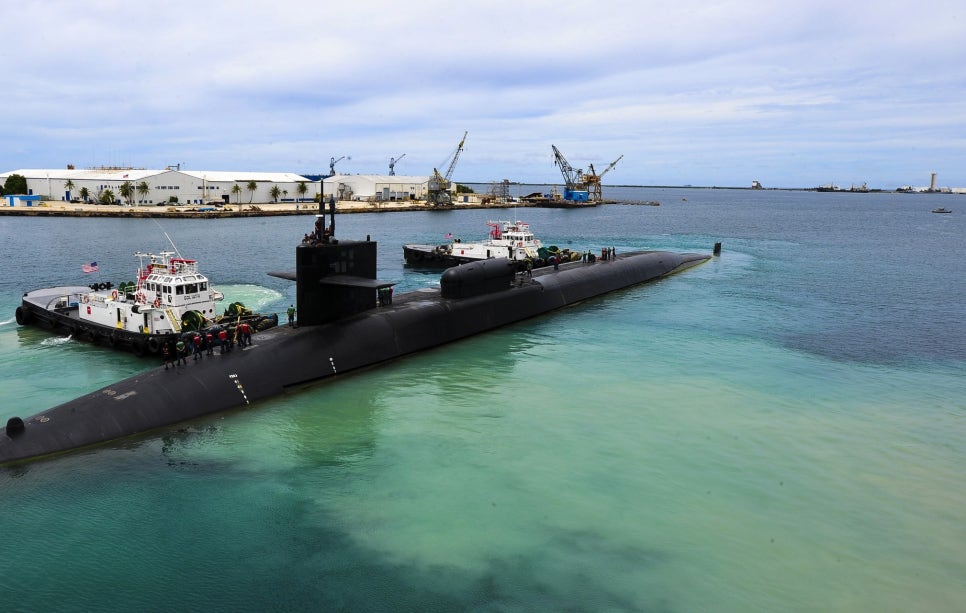
This requirement directly conflicts with US interests. Trump views the automotive industry as the crown jewel of US manufacturing. If Canada uses the submarine deal to lure Hyundai into building factories in Canada instead of the US, it provokes the “America First” agenda. Despite the Korean consortium’s competitiveness in performance and price, the geopolitical optic of shifting auto jobs to Canada could result in US blowback, further complicating the USMCA Review 2026 Impact.
The upcoming review is not merely a bureaucratic formality; it is a collision of energy security, manufacturing protectionism, and defense spending. Prime Minister Carney’s attempt to diversify towards China and the EU has only intensified the friction with Washington. As we move toward July 2026, investors must watch how the USMCA Review 2026 Impact alters the profitability of the energy sector and international defense contractors.
[TMM’s Perspective] The interconnectivity between these sectors is striking. We are witnessing a scenario where a defense contract in the North Atlantic is being influenced by refinery specifications in Texas and labor laws in Mexico. In my view, the “offset” requirements for the submarine deal are the hidden risk factor; if Korea agrees to build auto plants in Canada to win the sub deal, they risk the ire of the US administration on broader trade tariffs. It is a high-stakes balancing act where economic logic is currently subservient to political leverage.