
The Davos 2026 Annual Meeting is currently commanding the attention of global markets, serving as the premier intersection of geopolitical power and corporate strategy. Originally conceived to bridge the management gap between Europe and the United States, the forum has evolved into a critical barometer for future economic trends. As heads of state and industry titans gather in the Swiss Alps this January, investors must look beyond the pageantry to identify the underlying themes—specifically the resurgence of “America First” policies and nascent technologies like space-based data infrastructure—that will shape the investment landscape for the remainder of the decade.
The Evolution of the Davos 2026 Annual Meeting
To understand the significance of the Davos 2026 Annual Meeting, one must examine its origins, which are rooted in the economic disparities of the post-WWII era. Following the Second World War, American corporations like IBM, GE, and GM began to dominate global markets through efficient organization and meritocratic structures. In contrast, European firms remained stifled by bureaucratic hierarchies where seniority often outweighed competence.
This divergence was highlighted in 1967 by French journalist J.-J. Servan-Schreiber in his seminal book, The American Challenge. He warned that without adopting American management techniques, European companies would be reduced to mere subcontractors for US firms.

This warning resonated with Klaus Schwab, a German economist and professor at the University of St. Gallen. Schwab sought to create a venue to introduce American business strategies to European executives. He selected Davos, an isolated resort town in the Swiss Alps, for its specific characteristics: “deep dialogue in an isolated space.”
What began as the “European Management Forum” in 1971 expanded globally in 1973, rebranding as the World Economic Forum (WEF) in 1987. Today, the forum operates on a sophisticated membership model. Over 1,000 global corporations pay substantial fees to send their C-suite executives, subsidizing the participation of academic and political leaders.
Geopolitical Friction: Trump’s Return and Iran’s Exclusion
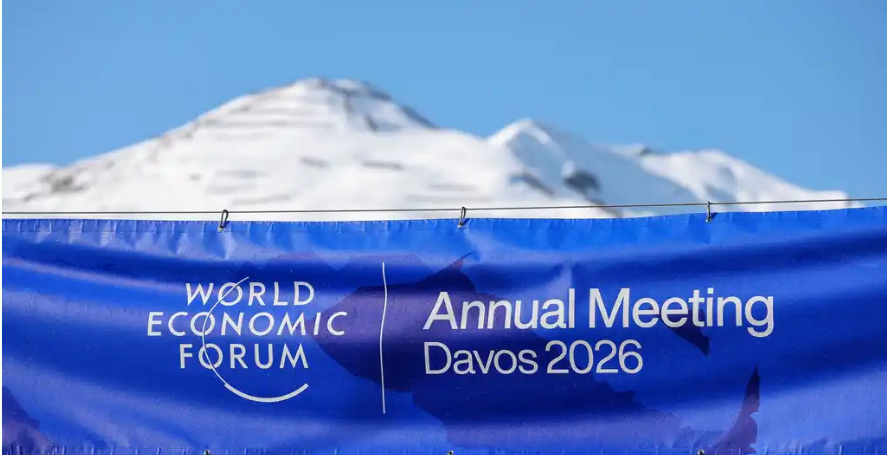
The Davos 2026 Annual Meeting, running from January 19 to 23, features a robust roster of 65 heads of state and 850 global CEOs. However, the spotlight is undeniably on the United States.
President Donald Trump is scheduled to speak on January 21, marking his third in-person appearance. He is leading the largest-ever US delegation, including five cabinet members. His presence represents a reinforcement of “America First” policies on the global stage. Investors should anticipate high-stakes private sessions between Trump and EU leaders, potentially covering sensitive topics such as Greenland and the conflict in Ukraine.
Notable Geopolitical Absence In a significant diplomatic development, the World Economic Forum has officially excluded Iranian Foreign Minister Abbas Araghchi from the Davos 2026 Annual Meeting.
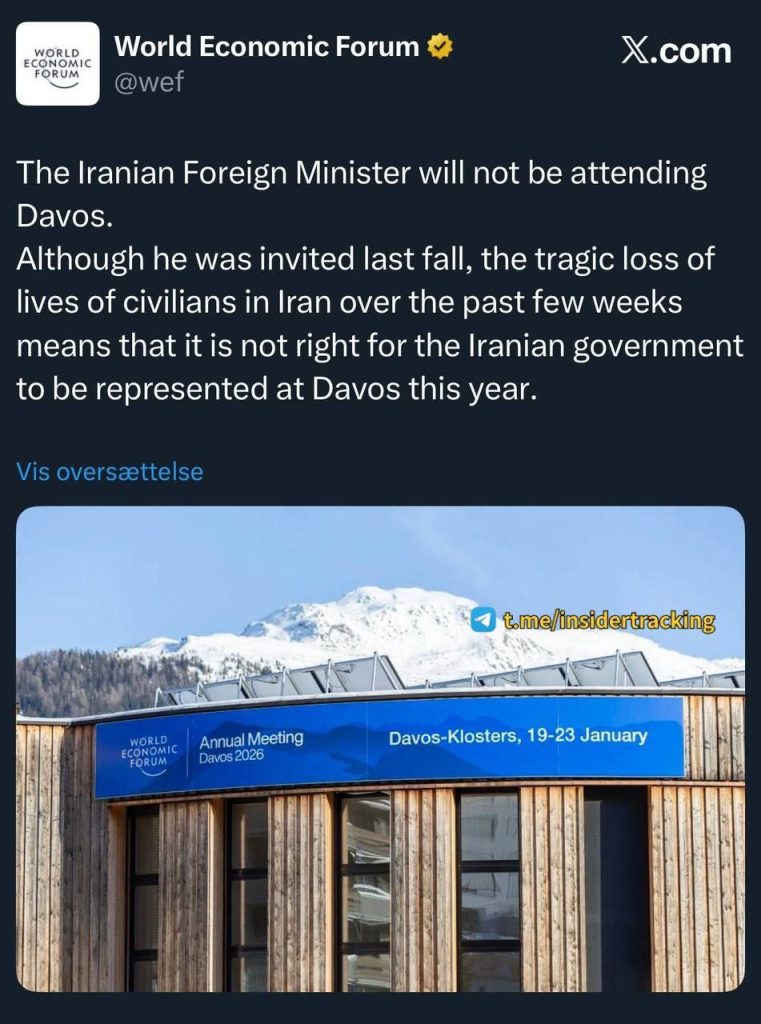
Although invited last autumn, the invitation was rescinded due to the tragic loss of civilian lives in Iran over recent weeks. Organizers deemed it inappropriate for the Iranian government to be represented amidst the current humanitarian crisis.
Investment Frontier: The Future Space Economy
For equity investors, the most critical signal from the Davos 2026 Annual Meeting may not come from political speeches, but from the technical sessions. On January 21, concurrent with President Trump’s address, the forum will host a public session titled “The Future Space Economy.”

This session addresses a primary bottleneck in the artificial intelligence sector: the massive power consumption and cooling requirements of terrestrial data centers.
- The Thesis: Utilizing outer space as a location for data centers.
- The Advantage: Space offers naturally frigid environments for cooling and access to solar energy, potentially solving the sustainability crisis facing the AI industry.
While this concept faces technical hurdles, its inclusion in the public agenda—broadcast globally via YouTube—signals that major capital allocators are beginning to view space-based infrastructure as a viable long-term solution.
The Davos 2026 Annual Meeting serves as more than a networking event; it is a preview of the year’s dominant macro narratives. From the geopolitical recalibration driven by the US administration to the exclusion of Iran, the forum highlights global fracture points. However, for the astute investor, the emergence of the “Space Data Center” dialogue represents a potential pivotal shift in the AI hardware supply chain. Monitoring the outcomes of these public and private sessions is essential for navigating the volatility of 2026.
[TMM’s Perspective] While there is considerable skepticism regarding the feasibility of space-based data centers, the mere fact that this topic has graduated to a primary session at Davos is significant. When global heads of state and CEOs convene to discuss “Space Data Centers,” it validates the sector as a serious area for future capital expenditure rather than a “dead” narrative. Furthermore, investors should closely watch the sidelines of the forum; the private, unrecorded meetings between Trump and EU leaders regarding Greenland and Ukraine could trigger sudden shifts in commodity and defense markets.
Take a look into my personal trading strategy Mastering TQQQ: The “5-218” Moving Average Strategy to Avoid the 90% Crash and comment what you guys think.